For Translating this page in your language use this translation tool (Refresh if the tool is not seen).

Muby Chem Logo
ISO-9001-2008 Certified Company

Click Here to Bookmark this Web Site

Email This Page Info to a Colleague or Yourself

Product Links:  Zinc Chloride      Ammonium Chloride      Calcium Chloride      Potassium Chloride     Sodium Acetate    Sodium Thiosulphate or Sodium Thiosulfate     Sodium Chloride      Magnesium Chloride     Mono & Di Ammonium Phosphate      Mono Di & Tri Sodium Phosphate       Mono Di & Tri Potassium Phosphate      Ferrous Sulfide      Sodium Bromide      Potassium Bromide      Zinc Sulfate      PCB Ammonical Etchant      Zinc Ammonium Chloride Flux      Sodium Diacetate     Sodium Formaldehyde Bisulfite      Sodium Monochloro Acetate     Aromatic & Perfumery     Oil Field Chemicals     IP BP USP Chemicals

Home/Products            On Line Enquiry            Contact/E-mail

Sodium Acetate

For Sod. acetate MSDS click here


Sodium Acetate Tri-hydrate (Crystals)

SPECIFICATIONS

Trihydrate Pure

Trihydrate Technical

Assay

99% minimum

98% minimum

Appearance

White Transparent Crystalline

Off-White Crystalline

Test Solution

A 10% Solution is clear & colourless

A 10% Solution is clear & colourless

pH

7.5-9

7.5-9

Arsenic

Less than 1 ppm

Less than 1 ppm

Calcium & Magnesium

Less than 50 ppm

Less than 100 ppm

Heavy Metals

Less than 1 ppm

Less than 5 ppm

Iron

Less than 10 ppm

Less than 10 ppm

Chlorides

Less than 0.03%

Less than 1%

Sulphates

Less than 0.02%

Less than 0.5%

Packing of Sodium Acetate

As required

As required

Sodium Acetate Anhydrous Powder.

AS PER I. P. SPECIFICATIONS

ANHYDROUS
PURE 

ANHYDROUS
REFINED TECHNICAL

99-101% Purity as CH3COONA.3H2O 98.5% Purity as CH3COONA. (No H2O) 98.5% Purity as CH3COONA. (No H2O)
White Powder Super Snow-White Powder Snow-White Powder
A 10% Solution w/v is clear and colourless A 10% Solution w/v is clear and colourless A 10% Solution w/v is clear and colourless
pH between 7.5-9 pH between 7.5-9 pH between 7.5-9
Arsenic < 2ppm. Arsenic < 1ppm. Arsenic < 1ppm.
Calcium and magnesium to pass the test 50ppm Calcium and magnesium to pass the test 20ppm Calcium and magnesium to pass the test 50ppm
Heavy Metals < 10ppm Heavy Metals < 1ppm Heavy Metals < 1ppm
Iron < 20ppm Iron < 5ppm Iron < 5ppm
Chloride < 250ppm Chloride < 20ppm Chloride < 100ppm
Sulphate < 225ppm Sulphate < 10ppm Sulphate < 20ppm
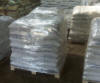
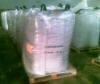
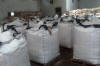
PACKING 50 Kg. in HDPE Bags with  liner 50 Kg. in HDPE Bags with  liner


We offer Sodium Acetate IP, Sodium Acetate BP, Sodium Acetate USP or Extra Pure made at our FDA approved world class plant Anmol Chemicals Taloja an ISO-9001-2008 Certified Company using standard GMP techniques  

Sodium Acetate Indian Pharmacopoeia

IP Grade

Specifications

ANHYDROUS PURE 

ANHYDROUS TECHNICAL

Purity

99 % minimum purity as CH3COONa

98.5% minimum purity as CH3COONa

Appearance

Snow-White Powder

White to Off-White Powder

Clarity of 10% Sod. Acetate Solution

A 10% Solution w/v is clear and colourless

A 10% Solution w/v is clear

pH (10% Sod. Acetate in water)

pH between 7.5-9

pH between 7.5-9

Arsenic

Arsenic < 1ppm.

Arsenic < 1ppm.

Calcium and Magnesium

Calcium and magnesium to pass the test 50 ppm

Calcium and magnesium to pass the test 100 ppm

Heavy Metals

Heavy Metals < 1ppm

Heavy Metals < 1ppm

Iron

Iron < 5ppm

Iron < 5ppm

Chloride

Chloride < 250ppm

Chloride < 1000ppm

Sulphate < 225ppm

Sulphate < 200ppm

Sulphate < 500ppm

Packing of Sodium Acetate

As required

As required

Sodium Acetate United States Pharmacopoeia (USP) Grade

Particulars

USP

Dry Basis Assay

99 to 101%

Characteristics

Colourless Crystals

Solubility

Soluble in 0.8 part of water and in 19 parts of Ethanol (96%)

Clarity and colour of  10% w/v solution

Clear and Colourless

Alkalinity (pH of 5% solution)

7.5-9.0

Arsenic

2 ppm

Calcium and Magnesium (calculated as Ca)

50 ppm

Heavy Metals as Lead

10 ppm

Iron

10 ppm

Chloride

200 ppm

Sulphate

200 ppm

Reducing Substances

Passes test

Packing

In 50 Kg HDPE bags with HMHDPE liner


Sodium Acetate:

Sodium acetate, (also sodium ethanoate) is the sodium salt of acetic acid. It is an inexpensive chemical produced in industrial quantities for a wide range of uses.

Applications

Sodium acetate


IUPAC name

sodium acetate (IUPAC)
 

sodium ethanoate (systematic)

Other names

sodium salt

Identifiers

CAS number

127-09-3 (anhydrous)
6131-90-4 (trihydrate)

Properties

Molecular formula

CH3COONa

Molar mass

82.03 g/mol (anhydrous)
 

136.08 g/mol (trihydrate)

Appearance

White deliquescent powder

Density

1.45 g/cm³, solid

Melting point

Decomposes at 324 °C

Boiling point

Decomposes

Solubility in water

76 g/100 ml (0°C)

Basicity (pKb)

9.25

Sodium acetate is used in the textile industry to neutralize sulfuric acid waste streams, and as a photoresist while using aniline dyes. It is also a pickling agent in chrome tanning, and it helps to retard vulcanization of chloroprene in synthetic rubber production.

It is the chemical that gives salt and vinegar chips (crisps) their flavor. It may also be added to foods as a preservative; in this application it is usually written as "sodium diacetate" and labeled E262.

As the conjugate base of a weak acid, a solution of sodium acetate and acetic acid can act as a buffer to keep a relatively constant pH. This is useful especially in biochemical applications where reactions are pH dependent.

Traditional applications of this buffering agent include the leather tanning and dye industries. It is used in TANNING to effect a more even and rapid penetration of the tan. In the TEXTILE industry, it is considered a dye and color intermediate, with specific use as a mordant in the dyeing process. Because of its ability to remove insoluble calcium salts, sodium acetate is further used by the textile industry to improve the wearing quality of finished fabrics.

It is considered one of the best agents available for the neutralization of mineral acids. It is commonly used in SOAP MAKING.

The FOOD industry relies on it as a buffer in controlling pH of food items during various stages of processing as well as for the finished consumable item. Sodium acetate is also used as a flavor enhancer in meat and poultry.

It may be added to foods as a seasoning, and to alcoholic beverages to decrease the risk of a hangover.

As the conjugate base of a weak acid, a solution of sodium acetate and acetic acid can act as a BUFFER SOLUTION to keep a relatively constant pH. This is useful especially in biochemical applications where reactions are pH dependent.

The COSMETICS industry also values a good buffering agent, so it uses sodium acetate in a wide variety of personal care items.

In PLASTICS manufacturing, it is used as a retarder for elastomers (polymers with elastic properties of rubber). The PHOTOGRAPHIC industry traditionally included it in its developer formula.

Newer applications of sodium acetate include its use as a carbon source in WATER TREATMENT. Acetate is a safe and environmentally-friendly alternative to hazardous methanol for the denitrification of wastewater.

The PETROLEUM industry relies on it as a buffering agent in petroleum production, drilling muds, and completion fluids.

It is also used in consumer HEATING PADS or hand warmers and is also used in hot ice. Sodium acetate trihydrate crystals melt at 58 °C, dissolving in their water of crystallization. When they are heated to around 100 °C, and subsequently allowed to cool, the aqueous solution becomes supersaturated. This solution is capable of supercooling to room temperature without forming crystals. By clicking on a metal disc in the heating pad, a nucleation center is formed which causes the solution to crystallize into solid sodium acetate trihydrate again. The bond-forming process of crystallization is exothermic, hence heat is emitted. The latent heat of fusion is about 264–289 kJ/kg. Unlike some other types of heat packs that depend on irreversible chemical reactions, sodium acetate heat packs can be easily recharged by boiling until all crystals are dissolved. Therefore they can be recycled indefinitely.

The MEDICAL & PHARMACEUTICAL industry uses it in formula for diuretic expectorants and systemic alkalizers. It is commonly used in dry blends for renal dialysis. The heat of crystallization generated by it is widely and effectively used in the heat pack industry.

Another new application of this versatile chemical is in poultry farming. Sodium acetate is added to drinking water for chickens to help prevent disease conditions associated with overheating and dehydration.

It is widely used in de-icer products, especially at airports

It is also used as a buffer in petroleum production, and for kidney dialysis processes.

All in all, sodium acetate indeed is a remarkable chemical with applications span a wide range of industries.

Sodium Acetate - Clinical Pharmacology

Sodium is the principal cation of extracellular fluid. It comprises more than 90% of total cations at its normal plasma concentration of approximately 140 mEq/liter. The sodium ion exerts a primary role in controlling total body water and its distribution.

Acetate (CH3COO ), a source of hydrogen ion acceptors, is an alternate source of bicarbonate (HCO3) by metabolic conversion in the liver. This has been shown to proceed readily, even in the presence of severe liver disease.

Indications and Usage for Sodium Acetate

Sodium Acetate Injection, USP 40 mEq is indicated as a source of sodium, for addition to large volume intravenous fluids to prevent or correct hyponatremia in patients with restricted or no oral intake. It is also useful as an additive for preparing specific intravenous fluid formulas when the needs of the patient cannot be met by standard electrolyte or nutrient solutions.

Contraindications

Sodium Acetate Injection, USP 40 mEq is contraindicated in patients with hypernatremia or fluid retention.

Warnings

Sodium Acetate Injection, USP 40 mEq must be diluted before use.

To avoid sodium overload and water retention, infuse sodium-containing solutions slowly.

Solutions containing sodium ions should be used with great care, if at all, in patients with congestive heart failure, severe renal insufficiency and in clinical states in which there exists edema with sodium retention.

In patients with diminished renal function, administration of solutions containing sodium ions may result in sodium retention.

Solutions containing acetate ions should be used with great care in patients with metabolic or respiratory alkalosis. Acetate should be administered with great care in those conditions in which there is an increased level or an impaired utilization of this ion, such as severe hepatic insufficiency.

The intravenous administration of this solution (after appropriate dilution) can cause fluid and/or solute overloading resulting in dilution of other serum electrolyte concentrations, overhydration, congested states or pulmonary edema. Excessive administration of potassium free solutions may result in significant hypokalemia.

WARNING: This product contains aluminum that may be toxic. Aluminum may reach toxic levels with prolonged parenteral administration if kidney function is impaired. Premature neonates are particularly at risk because their kidneys are immature, and they require large amounts of calcium and phosphate solutions, which contain aluminum.

Research indicates that patients with impaired kidney function, including premature neonates, who receive parenteral levels of aluminum at greater than 4 to 5 mcg/kg/day accumulate aluminum at levels associated with central nervous system and bone toxicity. Tissue loading may occur at even lower rates of administration.

Precautions

Do not administer unless solution is clear and seal is intact. Discard unused portion.

Sodium replacement therapy should be guided primarily by the serum sodium level.

Caution should be exercised in administering sodium-containing solutions to patients with severe renal function impairment, cirrhosis, cardiac failure, or other edematous or sodium-retaining states, as well as in patients with oliguria or anuria.

Caution must be exercised in the administration of parenteral fluids, especially those containing sodium ions, to patients receiving corticosteroids or corticotropin.

Solutions containing acetate ions should be used with caution as excess administration may result in metabolic alkalosis.

Pregnancy Category C.

Animal reproduction studies have not been conducted with Sodium Acetate. It is also not known whether Sodium Acetate can cause fetal harm when administered to a pregnant woman or can affect reproduction capacity. Sodium Acetate should be given to a pregnant woman only if clearly needed.

Pediatric Use:

Safety and effectiveness have been established in the age groups infant to adolescent.

Geriatric Use:

An evaluation of current literature revealed no clinical experience identifying differences in response between elderly and younger patients. In general, dose selection for an elderly patient should be cautious, usually starting at the low end of the dosing range, reflecting the greater frequency of decreased hepatic, renal, or cardiac function, and of concomitant disease or other drug therapy.

Sodium ions are known to be substantially excreted by the kidney, and the risk of toxic reactions may be greater in patients with impaired renal function. Because elderly patients are more likely to have decreased renal function, care should be taken in dose selection, and it may be useful to monitor renal function.

Adverse Reactions

Sodium overload can occur with intravenous infusion of excessive amounts of sodium-containing solutions. See WARNINGS and PRECAUTIONS.

Overdosage

In the event of overdosage, discontinue infusion containing the ingradient immediately and institute corrective therapy as indicated to reduce elevated serum sodium levels, and restore acid-base balance if necessary.

Sodium Acetate Dosage and Administration

Sodium Acetate Injection, USP 40 mEq is administered intravenously only after dilution in a larger volume of fluid. The dose and rate of administration are dependent upon the individual needs of the patient. Serum sodium should be monitored as a guide to dosage. Using aseptic technique, all or part of the contents of one or more vials may be added to other intravenous fluids to provide any desired number of milliequivalents (mEq) of sodium (Na+) with an equal number of acetate (CH3COO).

Parenteral drug products should be inspected visually for particulate matter and discoloration prior to administration.


Preparation

It is sometimes produced in a laboratory experiment by the reaction of acetic acid with sodium carbonate, sodium bicarbonate, or sodium hydroxide. These reactions produce sodium acetate (aq), water, and carbon dioxide, which leaves the reaction vessel as a gas, is produced by the first two.

CH3–COOH + Na+[HCO3]– → CH3–COO– Na+ + H2O + CO2

This is the well-known "fizzing" reaction between baking soda and vinegar. 84 grams of sodium bicarbonate react with 750 g of 8% vinegar to make 82 g sodium acetate in water. By subsequently boiling off most of the water, one can refine either a concentrated solution of sodium acetate or actual crystals.

Reactions

Sodium acetate can be used to form an ester with an alkyl halide such as bromoethane:

H3C–COO Na+ + Br–CH2–CH3 → H3C–COO–CH2–CH3 + NaBr

In such a reaction, the it is usually complexed with caesium in order to increase the nucleophilicity of the carboxylate group. For an exhaustive writeup on the subject go to University of Sodium Acetate


For more information contact manufacturer at:
MUBY CHEMICALS

S-8, SARIFA MANSION, 2ND FLANK ROAD, CHINCHBUNDER, MUMBAI 400009, INDIA.
TEL: (OFFICE) 91-22-23770100, 23774610, 23726950, 23723564. FAX: 91-22-23728264.

 e-mail: info@mubychem.com

Cell Call to Anmol: +91-9821870100 or Ambrish: +91-9821570100

Sodium Acetate Logo

Home/Products            On Line Enquiry            Contact/E-mail

Copyright and Usual Disclaimer is Applicable.
Last updated: 01 November, 2009.

Wise Men never Sit and Cry over their Loss,

But Clearly seek how to Redress the Harms.

University of Phase Change Material

Zinc Chloride 
Zinc Chloride BP USP IP ACS AR Analytical Reagent

Ammonium Chloride  
Ammonium Chloride BP USP IP ACS AR Analytical Reagent & Food Grade

Calcium Chloride 
Calcium Chloride BP USP IP ACS AR Analytical Reagent Food Grade

Potassium Chloride 
Potassium Chloride BP USP IP ACS AR Analytical Reagent Food Grade

Sod. Acetate 
Sodium Acetate BP USP IP ACS AR Analytical Reagent Food Grade

Sodium Thiosulphate or Sodium Thiosulfate
Sodium Thiosulfate or Sodium Thiosulphate BP USP IP ACS AR Analytical Reagent Food Grade

Sodium Chloride 
Sodium Chloride MSDS

Mono Ammonium Phosphate and Di Ammonium Phosphate

Mono Sodium Phosphate Di Sodium Phosphate & Tri Sodium Phosphate

Mono Potassium Phosphate, Di Potassium Phosphate & Tri Potassium Phosphate

Ferrous Sulfide

Sodium Bromide 

Potassium Bromide

Zinc Sulfate 

Sodium Diacetate 

PCB  Copper or Ammonical Etchant

Zinc Ammonium Chloride Flux

Home/Products